and has 0 comments
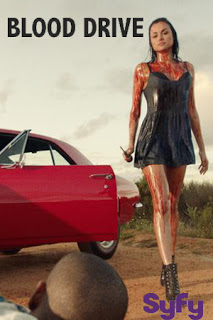
Oh, SyFy does it again with a show that is wild, totally over the top and really really fun. Post-apocalypse, hot rod cars that use human blood for fuel, cannibals, wild sex, murder sprees, wild people, Colin Cunningham, corporate overlords, awakened psychotic robots, making fun of corporate overlords, ridiculously attractive people surrounded by ridiculously ugly people... Blood Drive is just too silly to care and too wild to not enjoy. I am watching the third episode already and I am laughing my ass off: "Praise synergy for it provides us with low hanging fruit!", you gotta love that.

Update: of course something truly fun can't last. Blood Drive has been cancelled after just one season.

and has 0 comments
Finally, a fresh, unapologetically sci-fi story with so many interesting ideas and cultural innovation that I can barely wait for the second book in the series to come out.

Yoon Ha Lee creates this far into the future universe in which everything from social structure to space travel and military technology is run by rigid doctrine that uses a particular calendar. Certain battle formations, using certain weapons, doing specific things leads to "exotic effects", carefully manipulated through higher mathematics, that power society and military expansion. Of course, there are multiple possible calendaristical configurations, but they interfere with each other, so after choosing one, any deviation is considered heretical. Add to this an Asian view of hierarchy and politics and you get the most delicious book I've read in a long, long time.

Ninefox Gambit is, unfortunately, merely the beginning of the story. While one could consider the entire thing a standalone book that leaves the rest of the story to the imagination of the reader, the rich universe that it creates makes followups inevitable. In this case, I can barely wait for them. There isn't much else to say about the book other than urge you to read it. As with any good writing, the plot is simple, but the individual scenes give its flavor. It is an almost unspoilable story, since it doesn't rely much on twists, but on bringing value in every chapter, through rich characterization and original scenecraft.

and has 0 comments

The only fantastical element in this book, except for a ghost that makes a short appearance, is a change in location. The rest is historical fiction in some place that feels exactly like Renaissance Europe, only it has another name and other gods. Worst than that, the story is boring and the writing mediocre. I couldn't finish it.

The story in Children of Earth and Sky follows a few chosen characters while they navigate the treacherous waters lying between warring (and spying) nations. I mean this both metaphorically and literally, since it is also about ships crossing the sea. Guy Gavriel Kay has been writing published works since 1984 which is why I was surprised to see such an amateurish writing style. He uses several tools again and again and again, without much effect. The worse, for me, was describing the same scene from different viewpoints, one after another, even if it did nothing to enrich the story or develop characters. Another is a certain repetition of a phrase for emphasis, something like "He didn't like the book. He didn't." OK, emphasized enough! Also I felt that the author coddled his characters too much. Instead of making them suffer in interesting situations, he just lets them off easy with crises that they can easily handle or at least manage with heroic skill. In one of the most important scenes, one of a battle, he kills off a major character, at which point I was thinking "OK, it's getting started", only to resurrect them immediately after. Ugh!

So beside being a boring historical drama (I mean boring even for a historical drama!), it really nagged me that it was marketed as fantasy. Maybe I am just getting fed up, considering I've just read a western and a heist story, both included in the fantasy and sci-fi genre because they happened in the future or in spaaaaaace. Bottom line: I can't in good conscience recommend this book and I am quite amazed that it has such a high rating.

At first I thought Realm of the Damned would be boring. It was a series of comic book images animated via moving them around or deforming them, while a narrator was speaking on the background. The story also had the seeds that have been used so many times with little success: Van Helsing, vampires, werewolves and so on. But it was only one hour long, how bad could it be? And as the story progressed I really enjoyed the experience. And it wasn't because of the gory graphics or the strong voices or the heavy metal music as much as it was the story. Surprisingly deep, it explores not only a world that is dominated by undead monsters, but the inner turmoils of the last defender of humanity. The ending was gripping and terrible and funny at the same time.

I recommend it highly. Here is the trailer:

and has 0 comments
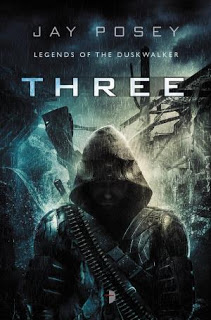
Three is a western. The fact that it happens in a post apocalyptic cyberpunk world is incidental. Jay Posey writes about the classical strong silent reluctant hero who fights for a good cause represented by a woman who has changed her ways and her innocent child. There are cyber zombies, there are evil pursuers and a world in which the strong survive in strongholds that are few and far between.

The book works because the writing is good and because the author never attempts to explain what happened to the world or how things actually work. It could have just as well been magic and pixie dust and the story would have remained basically unchanged. And unlike what the title of the review might indicate, you can read the book as a stand alone story, even if it has sequels. It had a beginning, a middle and a resolution.

Bottom line: an enjoyable book, albeit a bit predictable. Its strong suit is the good writing rather than a particularly smart idea or world building or even subtle characterization. Characters are kind of cardboard, but their actions and what happens around them is all well written. I don't think I will continue to read the series, but the author intrigues me and so I may read other books of his, like the new Outriders.

and has 2 comments
Cool people are those who respond to your opinions with condescension. Anything different from what they believe is ridiculous, pathetic, laughable or dangerous. I mean, they could even be right: you might have said something really stupid. But while you can handle finding out that something you were thinking is not true, they cannot. Their whole world view is based on them being right. While you might see them as a little hurtful and a bit annoying, they see you as a threat, because their truth is something they desperately cling to and any type of difference challenges their way of life.

You will usually meet them in positions of power. They are not enough of a sociopath to be top leadership, but they will be somewhere in the middle, telling themselves the story of how in control of their life they are. They clump together, because a tale is easier to believe in a group than by yourself. They drink together, they watch the same sports, they play the same games, they go in the same vacations, they have the same gods and the same rituals. Their information bubbles existed way before Facebook and while you might see them as ridiculous bubble people, they always fear you are carrying a pin to burst theirs. Cool people always know "how the world works" and to pretend otherwise would only mean you are not as savvy. Major changes leave them helpless and in search of a narrative that explains that away from their view of the world. Beware a former cool person for they are desperate.

They will applaud each other vigorously at every little success as they feel it's a validation of their own. Unfortunately, that means they will stand in the way of your success, as they feel it invalidates theirs. Cool people live on a narrow ladder, where everybody is clearly ranked on a vertical scale. Not being on their ladder makes them feel superior to you. Not wanting to be on their ladder makes them feel threatened by you. While you are exchanging information you possess, they only coerce it out of you in order to judge and rank you on their scale. When they are exchanging information is from a feeling of generosity, allowing you to know where the cool is; not being grateful angers them.

Cool people keep in touch. They cannot allow coolness to exist in different flavors. They maintain contact in order to synchronize their shared concepts. Socially it is easy for two cool people to communicate, because they are very similar. It is important to make other people feel not cool enough, because a cool person can't handle a conversation that doesn't follow a familiar pattern. While the problem is mostly theirs, they need to shift the blame onto others. They smile easily as a well trained skill, not an expression of how they feel. Smiles and laughter are tools and weapons for them.

Uncool people are essential to the well being of cool people. A careful dance of keeping people just far enough to indicate superiority, but close enough to make it visible to any outside observer, is essential to the lifestyle of cool people. While you either despise, pity or envy them, but you could easily do without them, they actually need you.

So how cool are you? I am not cool. I am better than cool. Me and my kind.
and has 0 comments
This reminded me of The Call, by Peadar Ó Guilín, another very well received book I've recently read. It features a female perspective, fairies and an unapologetic dissection of the human soul. The Call is better, but still, this is a very interesting book I will also recommend reading.

In Roses and Rot, Kat Howard uses the world of the Fae as an excuse to examine the bonds between people, the toxic effects of self-centeredness, whether in a parent or in yourself as you try to achieve some of your goals at the expense of others, and how people have to sacrifice for what they love. Imagine a magical place where everything is offered to you on a silver platter, with the promise that the best of you will get... a golden platter or whatever. And there is always a price.

I liked the psychological aspects of the story. There isn't much else of it, actually. As I said, the magic is merely incidental as the book is about the struggles of artists and daughters of idiots. I would go as far as not calling it fantasy at all. I disliked the close similarity between Janet and the girls' mother - I won't expand on this for fear of spoiling it. Enough to say that Helena's character and sidestory felt like a training run for what could have happened to the protagonist if not for her sister, so in one fell swoop, two characters from the already short list of relevant ones are just shadow copies of others. Add to this a lot of other details that are customized for the lead and you start to suspect this is a very autobiographical story. I don't know Kat Howard so well as to say it was, though. I will quote from the book though: “These [fairy tales] will be more autobiographical in nature than the Grimms'.”

Bottom line: It was a heartfelt story and I liked it. It is also short and not part of a billionogy, so you can just read it and enjoy it. Less fantasy than psychological drama, though.

and has 0 comments
Dark Run is a classic pulp space mercenary book. It isn't even sci-fi at its core. It could have just as well been a western, a pirates or a heist book, as the science and technology don't further the story in any meaningful way.

I don't have anything specific to say about the book. Mike Brooks uses an overused plot of a specialized team of renegades being double crossed and having to defend their honor and punish the responsible. The characters are pure cardboard, with no subtlety, and even the humor is weak. I mean, it's pulp fiction, the author did a decent job writing one. As literature, though, it's not something I could possibly recommend.

and has 0 comments
Sagas and trilogies be damned! The Summer Dragon was a really entertaining book and having it end as a mere episode in a larger story that hasn't been written yet is quite frustrating.

Todd Lockwood is mostly known for his fantasy illustrations, not writing, and Summer Dragon is his debut novel. It is an YA story, with a similar structure as so many others: young nobody discovers they have special abilities and are thrown in a world of mystery, wonder and danger, with adults being either weak supporting characters and/or villains, but done right! The heroine - yes, a girl - is thrown into a situation in which politics and culture are forcing her to either be completely passive and submissive or to take action by herself. She doesn't do it with superpowers, but with the knowledge she learned from her father and her own personal courage and ingenuity. In the end she does overcome some pretty insurmountable odds, but it never gets too annoying. If there is a flaw I have to talk about it is the fact that each chapter is written with the same hero's journey structure, with new tension added at the end and character building in the middle. The author is a bit too neat in following the writing guidelines.

I liked that the protagonist is a woman. This is, so far, a perfect feminist book, since she is fighting real issues, social, political and military, using her own skills and in the few situations where she is a love interest she doesn't automatically feel she needs to either reciprocate or condescend and insult her suitor. It is also a book about dragons, but she is the daughter of a dragon breeder, rather than a kid that suddenly discovers there are dragons or other crap like that. The world is not very detailed, but what is in the book is pretty consistent and has a lot of potential.

I don't want to spoil the book by giving details, but there was also something that I felt was a missed opportunity. In an already existing conflict a third party emerges, a super villain, if you will. It was the perfect moment to switch the real source of the "evil" and to reframe an existing war as something that no one participating really understood. As written, it is very difficult to understand why career military men locked in a prolonged conflict dismiss vital tactical and strategic information for silly things like religious fervor or personal greed.

Given the opportunity I would have immediately read the other books in the series. Alas, The Summer Dragon was released just last year and it's the only published book so far. If you want to avoid frustration, wait until Lockwood writes a few more books and then start reading the series. I have great hopes for it.

and has 0 comments
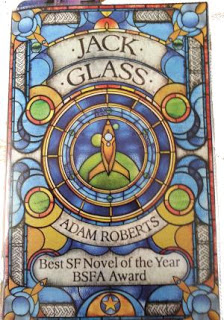
There is a cover for the book that writes "Best SF Novel of the Year BSFA Award". I can only assert that it was either competing alone, that they give a prize to all contestants or that the British SF Association doesn't know what a good book is. Its worst flaw is that it is naive. First with its depiction of space. Stuff in the book would not have worked in the 80s, I believe, much less in 2012 when the book was released. The style of the prose seems to emulate works from the 50s and 60s and at first I wondered if it wasn't intentional, like a sort of parody or tip of the hat. Regardless, the book remains naive in almost all aspects, even those of the basic plot, which is not sci-fi, but rather whodunnit and escape from the room stuff.

That being said, Jack Glass is not a totally bad book, either. It presented some ideas that were rather fresh. Using convicts to prepare asteroids for colonization, for example, or having trillions of people living in the Solar System, not on planets, but asteroids and such, the idea that each of these habitats would create their own flavor of religion and culture. But other than these rare juicy details, the rest of the book is quite boring, predictable and bad. The clues to solve the mysteries, rather than being presented to the reader so that they can participate in the solving, are brought in by random plot events, like dreams. People that were supposed to be the best rationalists, Sherlock Holmes style, were being manipulated and educated by ordinary people that somehow knew and understood more. The laws of physics, psychology and sociology are being completely ignored.

Bottom line, a bad book from Adam Roberts, with the occasional hidden gem that doesn't really save the silly plot and ugly narrative.

and has 0 comments
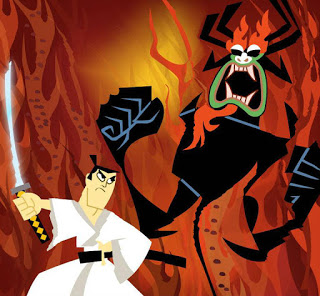
16 years ago, Samurai Jack premiered as an animated show where a honorable samurai travels through time to destroy the demon Aku, who has taken over the world and made it evil. With Genndy Tartakovsky's genius behind it, this tale of good versus evil never seemed too simple or too idealistic, something movies today and in the future need to learn. However, after only four seasons, the show was not renewed, leaving fans with the bitter sweet conclusion that evil will triumph if no one fights against it, especially in the world of movies and series.

And people fought and the series received its continuation... and its ending, a season 5 that ends in a glorious finale. What comes next is a spoiler for the last season and the show's finale, you've been warned.

Click to show spoiler

For Entertainment Weekly, Геннадий had this to say: This is it. This is the definitive end, and it’s a great end. I haven’t seen it yet, but I’ve storyboarded it, and I think it’s super satisfying, and it should close the door for me for Samurai Jack. … Now, look, there’s 50 years between season 4 and season 5, and if somebody wanted to jump in and do some stories in between, but for me this is the end

Anyway, I really hope Tartakovsky comes with something new soon, something that is just as creative and just as actual as Samurai Jack was. He somehow made a show about a samurai feel futuristic. That's not easy. And even his most childish shows, like The Powerpuff Girls, were great. He will be directing Hotel Transylvania 3 next, but I really wish he wouldn't burn out and stick to movies, especially stupid ones like this, when his shows were the highlights of my youth.

and has 0 comments
Just look at that book cover. Someone was already imagining the multiple Hollywood movies, or at least a TV series. Yes, it's another young adult story, but this one is different because it is from the point of view of a girl. Besides, I've read several YA books and I liked some of them.

In Cold Magic, Kate Elliott describes a feudal world in which the rulers are either princes or "cold" mages, although there are many other aspects of magic in the world that are briefly explored. There is a lot of history, too, parallel to the European one - if magic was real in the Napoleonic times. For the first quarter of the book I lapped it up. I was curious to see how this young girl manages to untangle the mystery of the things that are happening to her and if she will thwart the powerful people who want to use her and her girl cousin. However, after a few chapters in which kind of the same thing happens over and over again, with no real reason, I was getting restless. Add to this the long descriptions of personal fashion, grooming and judgement on how people look and what it tells about them and I was starting to get a little annoyed. When it all turned to romance, I was simply disappointed. It wasn't that the point of view of the young woman ruined the story, but that it irritated me enough to make me attentive to the plot holes.

Bottom line: I am half curios on how the world building will evolve and how the author is going to describe this alternate magical Europe, but on the other hand I feel like the entire book I waited for something to happen and to make sense, when in fact all characters did things in order to move the story in a certain direction. Instead of being character driven, the plot meanders and the characters drift on it like leaves on a river. I can't empathize with people that lack almost any kind of control over what happens to them, especially since the trope of the young person thrown into a maelstrom of unexplained situations with people that speak in riddles and keep things for themselves is so overused in YA novels and I am tired of it. I will not read the next books in the Spiritwalker series. It was fun for the first half of the story, but then it went downhill.

and has 0 comments
Gotta learn to not blindly trust book reviews that appear in my favorite web sites. I mean, they have the right to be wrong (aka to their own opinion). To be honest, I just expected the book to be better, I wasn't particularly upset with it. The review called it "the next Martian"; it's not even close. It's a completely different style, mood, idea and quality. But, that being said, I enjoyed it. Better still, I learned an interesting and probably valuable lesson out of it.

You see, Sleeping Giants is the closest I've come yet to a "hand held" book. The story is told exclusively through interviews and records of discussions. I mean, there is one scene where the heroes have to disarm some guards and instead of going quiet, they keep talking into their sat phone with someone so we can read what happened. It wasn't bad, but I sincerely hope that the rest of the books in the Themis Files series are not the same, although I am pretty sure I will not read them. However, I've learned from this. Even if you are shit at writing scenes, you can write a book that is being told through dialogue and short personal entries and tell the story.

So the story that Sylvain Neuvel tells is about us finding pieces of a giant alien robot and finding out how to operate it, even if the way it functions seems incomprehensible. I've covered the style, so now I have to tell you about the plot, which is naive to say the least, but enough to suspend your disbelief as you read the book. The beginning promises a lot more than the ending provides and, while I understand there is another book, I don't really care how the story ends.

Bottom line: a little fun sci-fantasy, with no real consequence or worth of mention. However, Sony did option the rights for the book, so who knows when we're going to get an alien robot defending the Earth against Godzilla movie, or whatever crap like that.

and has 0 comments
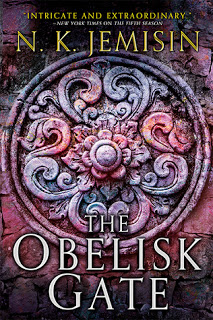
The Obelisk Gate immediately follows the story from the first book in the Broken Earth series, The Fifth Season. N.K. Jemisin now makes clear which are the sides in the conflict and, with the characters thoroughly fleshed out in the previous book, she is free to let things happen, to finally feel there is a story, and a root cause and a purpose and some action. That is why, in many regards, even if it is just another part of the same story, The Obelisk Gate is the better book.

Unfortunately for me, I won't be able to read the third book, The Stone Sky, until it is released and then... err.. made available, which happens sometimes in August of this year. Yet at the same time I have to say that there was enough in this book to appease my desire for more Broken Earth. I may even not read the third book, even if I am curious on how it will all end. It is an important lesson to learn, that stories can burn themselves out before their time, just like an orrogene using too much power and dying of it. Somehow, at the end of Obelisk Gate there is not enough mystery left but what was so bluntly left out by the author with all the silent and "I'll tell you just enough" type of characters she used. I have to wonder if there is even enough material for a third book. The fact that there is a 2014 short story that seems to happen long after the third book makes me think that it was always planned as a trilogy and this will probably be it.

Bottom line: The sides become clearer, characters align with them and a lot of the education of normal people is being discarded in favor of the brutal way of thinking in case of terrible cataclysm and dire need. There is still a climax to come, but what will it entail except the obvious outcome and some fighting? To me, the important part of the story has been told already.

and has 0 comments
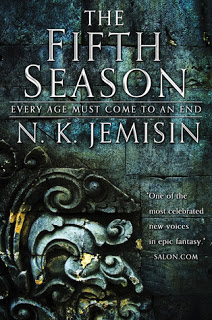
The first book in the Broken Earth series, The Fifth Season is a good book. I liked the world building, the characters, even if there are so few of them and grabbing all the action in the story, and I am going to read the second book in the series, The Obelisk Gate, next.

The story is mostly a setup for the series, where the main characters are introduced and the world is built. As a far into the future post apocalyptic Earth, it is a mixture of old dead civilization influences and pure human survival. That is why some words that are particular to our culture stick out when used and N.K. Jemisin does slip a few in there, although not enough to be annoying. The book is split into three view points: the basically orphaned Damaya, the talented Syenite fast climbing in the ranks of the Fulcrum orrogenes and the old rogga Essun, walking a damaged landscape in order to find her husband... and kill him. The Essun point of view is written in second person, which may be off putting for a while, but one get used in time.

There isn't much else I can say without spoiling the story. The feeling at the end of the book is clearly not one of closure and catharsis, as it ends abruptly and you realize it is just the first part of a larger tale. While I can't say I was awed by the content or the writing style, they are both solid and professional. The book captivated me and I will be continuing to read the story, mostly to see where it goes.