and has 0 comments

I was looking for autobiographies, since I liked quite a few of them lately and I felt like more, and so I got two. One is interesting because it is finally in print after 100 years since the author's death. I am talking about the first volume of Mark Twain's biography. However, I really could not make myself read it: the language was so pompous and the content so lame that I felt pain trying to.

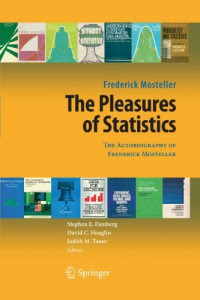
Not so the second book, which seemed even more unlikely for me to like it: THE PLEASURES OF STATISTICS: The Autobiography of Frederick Mosteller, but which I did. It started with a few projects that Fred Mosteller participated in, explaining the day to day concerns and situations of a statistician while working on them. I thought at first that the book is going to be all like this, so after about a third I was about to abandon the read. You see, it was all very interesting from a professional statistician's point of view, but I wanted the more personal viewpoint of the man. And so I got it. Suddenly the book changed pace and went with the early life and education of Mosteller. The end of the book again covered some cases of work, but this time with a personal touch that explained the motivation behind the acts. And finally, the editor's epilogue, written from testimonies of friends and colleagues.

In this review, a Theodore M. Porter argues that the autobiography was flawed, as it covered little of his family life and couldn't reconcile the different viewpoints that appeared in the book, like the scientific and personal. But I disagree. The autobiography was unfinished and I guess the editor did the best he could with what he had, but it couldn't have been a lot different from what Mosteller himself intended. You start with the actual work: statistics, explained in layman's terms, then you continue with the actual man, explaining the origins and education, then you get back to statistics, but examining the work from the personal viewpoint of the man described. Yes, he could have written about his family more, but it wouldn't have been about statistics. The little he does write about his wife is about how supportive she was throughout his career. And yes, the tone of the book is a bit clinical, but this is how the writer actually thought like; he was a scientist in the true sense of the word and I liked this book exactly because it made me understand how such a man thinks and feels.

Even more than the structure of the book and the insight in the mind of a conscientious and brilliant scientist what I liked most is the peek at the world in the middle of the 20th century and how strikingly different it was from what we see today. The concerns of a teacher towards the best method to get his students to understand and like the subject, the way people were getting together to solve problems and worked for years on a book or bunch of science papers, the way academia was also supportive, not only political, and most of all, to see how people can be both brilliant and empathic, both clinical in science and warm in person.

I wouldn't recommend this book to everyone. I had a hard time reading it to the end and paying attention to every bit. Nor should one study it like a school manual, because as far as I see, the book is about a man's soul and you only have to understand and feel that. Whether it is because of my autobiography fad or because I resonated with the man or for some other reason, the bottom line is that I enjoyed reading the book. Maybe you will too.
and has 0 comments
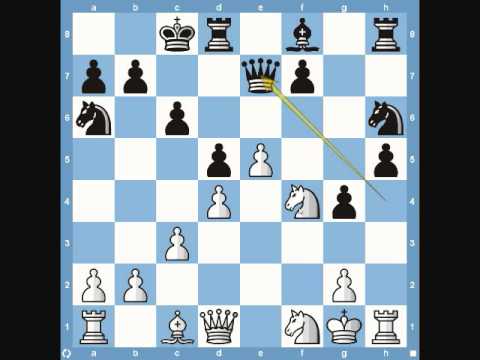
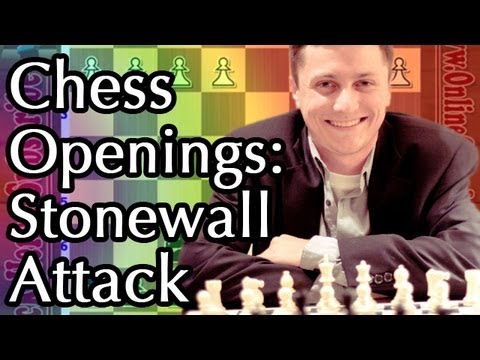
Luckily for me, some chess videos are for beginners like me. Here is one from OnlineChessLessons, describing a simple, clear opening called The Stonewall Attack. After watching the video I played a game with my trusted Nokia phone and managed to create a game starting with this opening. I then analysed it using chess engines Houdini and Rybka and annotated it manually. Check it out, including the variations.

Video first:

Make sure you also follow the article attached to the video.

And now my game:
[Event "29/10/2011 1:08:49 pm"]
[Date "29/10/2011"]
[White "Siderite"]
[Black "Nokia Easy5"]
[Result "1-0"]
[ECO "D05"]
[Opening "Colle"]
[Variation "5.c3 Nc6 6.Nbd2 Bd6 7.O-O O-O"]
[TimeControl "600"]
[Termination "normal"]
[PlyCount "59"]
[WhiteType "human"]
[BlackType "computer"]


1.d4 e6 2.e3 d5 3.Bd3 Bd6 4.f4 Nf6 5.Nd2 O-O 6.Ngf3 c5 7.c3 Nc6 8.O-O c4 9.Bc2 Ng4
{At this point, the engines suggest Bxh7, a classic sacrifice.}
10.Qe2
{However, I moved the queen to defend e3.}
( 10.Bxh7+ Kxh7 11.Ng5+ Kg8 12.Qxg4
{This variation wins the h7 pawn, but moves away from the spirit of the original game.}
12...Qf6 13.e4 ) 10...f5
{At this point, engines suggest Ne5, followed by knight exchange from black.}
11.h3
{I chose to shoo the knight away, but weakening g3, where the knight would love to come later.}
( 11.Ne5 Ngxe5 12.dxe5 Be7 13.b4 ) 11...Nf6 12.Ne5 Qa5 13.g4 fxg4 14.hxg4 Qb6
{engines would want me to attack the knight on f6 before moving the rook out.}
15.Rf2 ( 15.g5 Bxe5 16.dxe5 Ne8 17.Kg2 g6 18.b3
{Engines decide to try a queen side attack as well, in order to weaken the black pawn chain. I was not interested in that.}
) 15...h6
{engines suggest attacking the rook and with Ng6, which is a natural attacking move and a lovely outpost.}
16.Rh2 ( 16.Ng6 Rf7 17.g5 Nh7 18.Qh5 Ne7 19.Nxe7+ Rxe7 20.gxh6 Nf8 21.Rg2 Qc7 22.Qg5
{However at this point the game moves into queen side attacks and a slower attacking pace.}
) 16...Ne7 17.g5 hxg5 18.fxg5 Bxe5 19.dxe5 Nd7
{engines suggest now a beautiful move: Rh8, followed by a munching of black pieces or/and mate. Make sure you check out the variation.}
20.Nf3 ( 20.Rh8+ Kf7 ( 20...Kxh8
{Taking the rook leads to a quick mate.}
21.Qh5+ Kg8 22.Bh7+ Kh8 23.Bg6+ Kg8 24.Qh7# ) 21.Qh5+ g6 22.Bxg6+ Nxg6 23.Qh7+ Ke8 24.Qxg6+ Kd8 25.Rxf8+ Nxf8 26.Qf6+ Ke8 27.Nf3
{Try this variation on a chess engine to see it to the end. White is only one pawn up, but it is a passed one. The king is safe as well.}
) 20...Rb8 21.g6 Nf5 22.Rh3 Nh6 23.Kh1
{I felt like the pin on e3 was annoying and stopping me from using the black bishop. The engines recommend moving Qh2 instead, which is much better.}
( 23.Qh2 Nc5 24.Ng5 Ne4 25.Bxe4 dxe4 26.Nh7 Qc7 ( 26...Rd8
{If you wanted to know why black did not move the rook when attacked by the knight, follow this variation through.}
27.Rxh6 Rd1+ 28.Kg2 Qd8 29.Nf6+ Kf8 30.Rh8+ Ke7 31.Qh4 Rd2+ 32.Bxd2 b6 33.a4 Qxd2+ 34.Kh1 Qe1+ 35.Rxe1 Bb7 36.Rxb8 Bc8 37.Rxc8
gxf6 38.Qh7# ) 27.Nxf8 Qd8 28.Rxh6 Qg5+ 29.Kf2 Qxh6 30.Qxh6 gxh6 31.Nh7
{At this point white is a knight up, but what a boring continuation.}
) 23...Nf5 24.Qh2 Ng3+
{Engines suggest I move the king and concentrating on the attack, but I took the knight with the rook.}
25.Rxg3 ( 25.Kg1 Qxe3+ 26.Bxe3 Ne2+ 27.Kg2 Nf4+ 28.Bxf4 Rf5 29.Rh8# ) 25...Re8 26.Qh7+ Kf8 27.e4
{At this point, a mate in 8 is found.}
27...Qc7
{But with this move, mate will happen in 4.}
28.Bg5 Nf6 29.exf6 Rd8 30.Qh8# 1-0


Enjoy!

P.S. I am currently looking for a method of displaying the game as I want it on the blog: dynamic, with annotation and variation support, preferably something that is not Java and optimally something that reads the PGN from a span and replaces it with a nice looking chess interface. Right now, the usual game engine fails for some reason I need to analyse.

and has 0 comments

The complete title of the book is How Life Imitates Chess: Making the Right Moves, from the Board to the Boardroom, which is a mouthful, but very precise. It does explain how principles of chess, economics and politics apply in all three fields and how Garry Kasparov has evolved from chess player to world champion and, nowadays, into a political anti-Putin figure.

If you ask me, abandoning chess to get into business and worse, politics, it's a complete loss. However I do understand the guy, he got bored. Someday I may abandon computer programming.

Back to the book, though, it felt a lot like The Art of Learning, also written by a brilliant chess player (who incidentally also abandoned chess... hmm). It was more precise, most logical, though, looking at things from a more of a clinical perspective. I would have wanted to learn more about Kasparov's relationship with Karpov, for example, since he is always calling him his nemesis, but never says anything about how he felt about the guy.

This book is peppered with good advice, historic comparisons and great quotes from chess players and great men. Also, short descriptions of the relationship between famous "chess pairs" are giving the book an extra chess dimension. All in all I recommend it highly, although it felt more like a useful reference than a soul book like The Art of Learning.

and has 1 comment
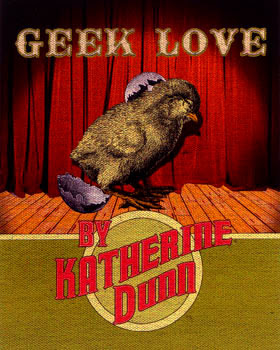
Geek Love is another title that mislead me. Geek, in this book, refers to the original definition of the word "A carnival performer who does wild or disgusting acts" and not a cool lovable geek as myself. The subject is "controversial": the life of an albino hunchbacked dwarf woman as a member of a carnival family.

There is a lot going on in the book. Carnival people poison themselves in order to make their children as freaky as possible. Said children are then raised only if they are strange enough. The failures are either preserved in glass jars if they are too mutated, or given away if they are too normal. The successes range from the main character, to a sociopath hairless cult leader with flippers instead of members, to siamese sisters that have the same lower body to a telekinetic God like child who only wants to be loved and gets manipulated into doing stuff for others. The sisters later give birth to a grotesquely obese child, fathered by a man with half his face blown up who squirts inside their vagina in his death moment. The death and the face blowing are unrelated. There is more, like a rich heiress who pays beautiful women to mutilate themselves in order to have a better life, unencumbered by the sexual desire of her subjects or of the people surrounding them.

The book itself was pretty innovative, but rather boring. If I had an alternative, I wouldn't have finished it, but as I had not, I am a bit proud of having finished it. If nothing else, the book is strange enough to be interesting. Also the writing is pretty good, introverted, taking the reader inside the mind of a person who considers normal people too bland and treasures her deformity and that of her daughter, fathered through telekinesis with the sperm of her brother.

Don't get me wrong, it was not painful reading the book and I do not regret having reading it. However I wish there was something more interesting in the story other than the strangeness of one's thoughts.

and has 0 comments

As an avid viewer of TV series and movies alike, I am always discussing the latest shows with my friends and I have been surprised to notice that not many knew about Entourage. I consider it a shame, as this series is exactly what a TV show needs to be and so few actually manage to do what it does.

Entourage is the story of a young talented actor who rises from anonymity with the help of three childhood friends. They are practically brothers and, even if he is the only one of them who "made it", they still live together and share everything, while navigating the weird world of Hollywood. The format of the show is short half an hour episodes that never leave you hanging when they end and that, for me at least, always provide a good feeling. I am not talking about silly ha-ha comedy here, I am talking about a lightweight dramedy that makes you smile. At the end of an episode you don't want more, you feel content, and you only begin to crave more when that contentment wears off. This is what today's media shows have forgotten how to do!

I was a bit sad to see the eighth and last season of the show end with its eighth episode a few days ago. I really wanted more of this and now that Entourage is no more, I know it would be hard to find a show that would bring the same peace of mind after each episode. And you haven't heard or tried Entourage, you should. Good show!

and has 0 comments
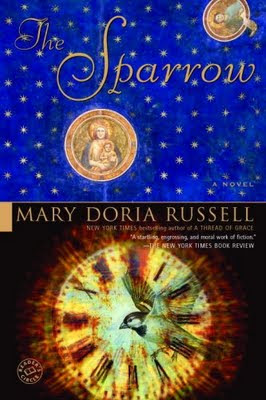
The Sparrow is, in my opinion, a good example of politics in literature, as it won several prestigious prizes, but is, in my own view, slightly above average. To quickly summarize the book, it's a Jesuit meets New World story, only the plot is set in the future and the new world is another planet.

Maybe I am just bitter because after tedious chapters about the relationships between the characters, the sci-fi was minimal and outdated. In fact, the author herself admitted that the kind of story she wanted to write could not be set on Earth because there are no new worlds here; this leads me to believe that the sci-fi was incidental and it bloody feels that way, too.

I will give credit where it is due, though. The woman documented herself well and presented interesting characters in great detail. Also the story itself is pretty solid, albeit a bit boring and focused too much on the religious. Other than that, it felt like a 1960's book. I was shocked to see that it was published in 1996. Some of the technical details described in the book were outdated even then.

About the plot, a discreet mission to a nearby planet is organized by the Jesuits, because all the other players in the field like the United Nation are too bureaucratic and talk about it more than actually doing something. The story starts with the return of the only survivor, priest Emilio Sandoz, and then the book continues with back and forth lines of now and then. The ending felt rushed and a bit anticlimactic. Maybe I was just not in an empathetic mood and couldn't care less about the religious and cultural sensitivities of the people involved and from all the characters, only Jimmy, the tall technical guy, felt agreeable. Who would have guessed? :)

Bottom line: I will not read the sequel book and that should say a lot. The book is not bad, though, and I may be berating it too much. A thing is certain, this is at the lower edge of the sci-fi scale, regardless of writing quality.

Update: In lack of a good book to read, I started on Children of God, the sequel to The Sparrow. Russell's talent for tedium, futile philosophy and rape fantasies reaches new heights in this book, so much that I just couldn't finish it. I usually finish watching movies and reading books even if they are bad, just for the experiential value alone, but I couldn't do it with this one. You have the same pointless priest, wallowing in self pity and then pathetically letting himself be used again, all the time asserting that he won't. And just so the reader would have no thoughts that the man could find a way out, a chapter of one of his kidnappers getting old on Rakhat, smack in the middle of the book, erases that possibility. What would be the point of reading on? Just for the ridiculous discussions about different Gods between random people? No. Just avoid this one.

When I was a child I watched with huge eyes movies like Hackers, enjoying the shenanigans of computer rebels fighting the stupid law enforcement and the "evil" hackers. Of course, there was also Angelina Jolie. Even then I knew that my pleasure was a guilty one: no way could the police be that stupid, no way it would be that easy to penetrate all kinds of systems and produce effects so flashy. A while after that I watched Skeet Ulrich in the movie Operation Takedown, which was a more realistic hacker movie (and one I think Skeet did a great job in). It depicted how Kevin Mitnick has been apprehended by the authorities. I really loved that movie, although it had a lot of eye rolling moments.


Fast forward to now, reading Ghost in the Wires, Kevin Mitnick's book about himself, practically a hacking autobiography, and I loved this book every bit as much as I liked those movies as a kid. Not only I couldn't leave the book out of my hands once I started reading it, but was shocked to see that reality is not that far away from what was depicted in hacking movies. It was also interesting to read how the script of Operation Takedown came to be, which Kevin considers defamatory and mostly untrue.


Long story short, Mitnick is a smart kid with a great memory, an absent father and no real friends. He starts dabbling with radio and telephones and manages to get access to phone systems way before computers where personal or connected to each other. He's a kid, though, and he gets caught a few times. Nobody seems to understand he does it just for the fun of it and he can't seem to understand why nobody gets him. In the end, pushed by the desire to challenge himself, but also by authorities baiting him all the time, he becomes a life long hacker and eventually gets caught.


A shocking part of the book is how easy it is to penetrate any system, not by whatever technical wizardry, but by simply tricking people into giving you information and access. Called "social engineering" it was Mitnick's strongest point and at several times in the book, when the technology would not allow him to enter one system or another, he would just abandon the tech stuff and go with tricking people. Already having knowledge on how to manipulate phone systems made that a lot easier, as well.


Another, less shocking, but utterly disappointing part is about authorities. Just as they are now about file sharing and whatever "crisis" they are in, law enforcement agencies are basing their entire existence on pure power of coercion, ignoring the rules that they themselves are enforcing and being motivated only by keeping that power in their hands. Technical morons, they only seem to be getting into the action when their pride is affected. In this book Kevin Mitnick dances around security personnel, local cops, FBI, NSA several steps ahead of them, but they only seem to really mind when newspapers start publishing articles that makes law enforcement look bad. And once they have him, caught only with the help of other hackers, they are using all the dirty tricks in the book to bring Mitnick to his knees. Nothing has changed from then to now, just look at cases like Gary McKinnon's. Intimidation is a bully's greatest strength. That's sad.


I would have to say that the most unexpected thing was the tone of the book, which is almost exuberant. Mitnick has not become a bitter and paranoid man after countless personal betrayals and authority abuse and he is not angry at all. If anything, the guy is happy to have lived as the lead actor in the "Myth of Kevin Mitnick", which has grown way bigger than the real person. There is a scene when he gets outside of a building and there are hundreds of fans there, shouting, and he looks behind to see if there is a celebrity around.


Bottom line: this is a book you can't miss. It is easy to read to the point of instantly addictive, it is well written with enough juicy technical details to keep one interested and, most of all, makes you feel good, even in the horrible moments of his detention. It makes one wonder, did Mitnick socially engineer himself into remaining an open and cool guy in the face of adversity? Or is it he had this strength all along and that is his most powerful "magic"?

and has 1 comment
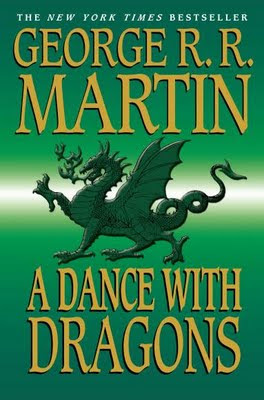
I've always felt that a lot of movies and books lack realism, that when the hero survives and gets the girl, while the villains get their rightful punishment the whole story becomes null and void. Therefore I believed that the opposite of this - a character centric plot, a realistic story, unexpected outcomes - would spell a good story and wonderful books/movies. Such is the tale in A Song of Ice and Fire, the seven (until now) book saga that I am currently reading, in which A Dance with Dragons is the fifth book.


Imagine my surprise in discovering that the other extreme is just as bad. In ASOIAF, there is no real main character. A lot of heroes and villains to choose from, but, completely unexpected, heroes suffer and die, while villain prevail. Maybe it's the other way around. Maybe nobody truly prevails. Certainly they all suffer. So what is wrong with this picture? George R. R. Martin went too far. His tale is now more of an alternative history than a true story. Maybe the sixth book will be different, but how can it be and still remain faithful to the first five? How can it continue the way the story went so far without a pointless struggle, where random things happen to random people? I mean, if I like this, I should start reading history books. My father would be pleased, I am sure :)


A Dance with Dragons takes place in a period in time that mostly overlaps the fourth book. The author acknowledged that there were too many characters doing too much in that short amount of time and, rather than split the storyline in the middle and create the "left hanging" effect, he opted for a geographical (more or less) division of the plot.


I liked the book. It started with a lot of setup, and that is what most of the book is about, but it also got deeper into magic and Arya's assassin training and what Jon and Tyrion did. I would say they are my favourite characters so, in that respect, the fifth book is better than the fourth. Can't say more about it without ruining the fun, but I was not disappointed, only slightly annoyed to see that what I really wanted in a book I got and I was still not completely satisfied.


My theory is that the stern characters in the book represent Martin's own father, while Tyrion and Jon are reflections of his own persona. Sansa may be the clueless girl who broke his heart, while Arya would be his daughter or younger sibling. I am just theorizing here, as I have not read any bio information of the author. Perhaps he represented himself as Wun Wun :)


I am waiting for the sixth book to appear, but the second book in the saga appeared two years after the first, the third two years later, then five years, then six! At this rate the sixth book will be published in 2018, with Martin of 70 years of age and waiting for the seventh eight or nine years later.

and has 0 comments
Kary Mullis is a chemist who, in 1983, invented Polimerase Chain Reaction, something that would revolutionize DNA analysis in terms of increased speed. He won the 1993 Nobel prize for that. He also is a controversial scientist who claims possible alien encounters and telepathy, denies global warming as an effect of human intervention, is skeptic about HIV causing AIDS and generally believes that most scientists are inventing reasons to get funded rather than doing anything scientific. He also admits smoking pot, taking LSD and generally experimenting with any mind altering chemical that he can make. He likes women and some of them like him. That is what this book is all about, a sort of "I am Kary Mullis, hear me roar!".

I started reading the book because I was falsely led to believe that he describes how training his mind with LSD lead him to the idea of PCR. The book is not about that at all, and if the article above is true about Mullis had an advantage over his colleagues: he had trained his brain to think differently by using hallucinogenic drugs, there is no mention of that in this book.

It is simply an autobiography, but written with gusto and sincerity. Some of the things he says are both logical and hard to accept (because so many others are of opposite views), some of them are simply personal beliefs. As many a talented person, he is intelligent, he had early opportunity to practice his passion (chemistry), a close friend to share it with and support from a local chemistry business owner who kind of adopted him for the summers and gave him the tools he needed to grow. The way he writes his book reminds me of the style of another scientist friend of mine: devoid of bullshit and intolerant of stupidity.

Bottom line, it is a nice book, simply written, short, I've read it in a few hours. It is a window in the life of an interesting person, and as such, I liked it. I can't say I've learned much from it, though, and that is somewhat of a disappointment coming from a book written by a man of science.

and has 1 comment
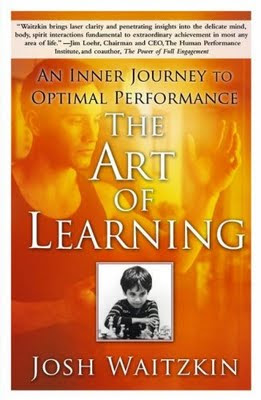
The Art of Learning is a wonderful book, both concise and useful, with tremendous sources for inspiration at every level. It also has more meaning to me, as it started with an investigation in the life of Josh Waitzkin, prompted by my renewed attention to chess.
To start from the beginning, I've first heard of Josh Waitzkin when I've started going through the "academy" section of ChessMaster XI. The first chapter in this section was Josh Waitzkin's academy, which taught with examples of both life and game. I was intrigued, so I looked the guy up. This way I found references to Searching for Bobby Fischer, a Hollywood movie about the early life of chess prodigy Josh Waitzkin, based on a book by his father. I watched the film, with both positive and negative feelings, but at the most I was even more intrigued. I then found out about the two books that Josh wrote: Attacking Chess and The Art of Learning and started reading the latter, since I had to read it on my old Palm in the subway and I am not yet at the level in which I can mentally visualize chess notation.
The Art of Learning is everything I wanted in a book about learning: the personal introspective view, the theory of learning and its mechanics, clear examples and methods of achieving the same results. Frankly told, I doubt many people can learn at the same speed as Josh Waitzkin can - clearly the guy is a genius - but there are insights in this book that blew me away.
The book is structured in three parts:
  • The Foundation - describing the early experience of learning, the downfalls, the insights, the situations in which Josh found himself as a child discovering the game of chess and then becoming National chess champion.
  • My Second Art - the part where he finds less peace in chess and decides to abandon it in favor of the martial art of Tai Chi Chuan, which centers him and presents new opportunities for learning. Here similar principles are found to the ones related to chess.
  • Bringing it All Together - where Waitzkin describes methods for identifying your own method of learning and reaching the state of mind most conducive to high performance

It all ends with a climactic Taiwan International martial arts championships that Josh wins, overcoming adversity and malevolent judges, a story that rivals any of Van Damme's movies, but also shows where the inspiration for those came from.

There are some ideas that I could understand immediately, seem obvious, but I've never thought of before:
One of them is that the unconscious mind acts like a high speed parallel processor, while the conscious mind is a serial decisional engine. An expert in a field does not think faster than a beginner; he only placed many of the underlying principles in the subconscious, running them at high speed, and leaving the conscious mind decide, like a manager, from the granular information that is precomputed and available. That makes sense at the smallest biological level. Think of the frog eye that sends a yes/no signal through the optical nerve when a fly enters the field of view - the frog does not have to decide if what it sees is a fly or not. But it also explains quite clearly the effect of training, something that I, to my shame, had not understood until now. Training is not simply learning, it is also moving the information downwards, "internalizing" it, as Waitzkin calls it. GrandMasters do not think about the possibilities on the chess board from the bottom up, they already see structure and work directly with the aggregated, higher level information. Martial arts experts don't count the steps in a complicated move, they just make them. Normal people do not put a foot in front of the other, they walk, they don't string words up, they speak.
Another idea is that the process of learning, done in small increments, allows the direct internalization of concepts before we use them in combinations. First move a few pieces until you know how they work, don't start with complicated chess games. Reduce the scope of your training and the internalization will come a lot faster. Then, in a complex game, you just use the things you have learned previously. When training to fight, train each small move before you start combining them.
This is an important idea in The Art of Learning: the difference between what Waitzkin calls entity-learning and process-learning. Entity learners will try to find the quick way out, find the small trick that get the problem done; they will care only about the end result, collapsing under the fear of losing. The process learner would enjoy the challenge, see each problem as something that can be solved if attacked metodically and chipped away at bit by bit. They will value the process of learning over the end result. An entity learner will try to learn as much as possible, in the end reaching mediocre levels of understanding in all fields, while a process learner will take each process as far as possible before engaging another. Process learners would say "I didn't learn enough" when losing, while entity learners would say "I wasn't good enough".
I am sorry to say that I apparently fall towards the entity-learner category. It is obvious that must change and I hope it can. What I gathered from this concept is that entity learners identify themselves with the solution of a problem. Losing makes them losers, winning makes them winners. Process learners identify themselves with the process of learning, making them bad or good learners. A very good point Josh makes is that the type of learning is usually caused by the way parents reacted to the early success of their children and also that it can be changed, it is not set in stone like just another cemmented childhood psychological baggage.
An interesting thing about the book is that it also provides some mechanisms to improve, to reach that "zone" of serenity and presence in the moment. Borrowing from Taoist concepts, Josh Waitzkin advocates leaving in the moment, being present, aware, and he provides methods to train to reach that present state at will. I find that very interesting.

In the end I would call this one of the most useful books I've read and I certainly intend to improve on myself using some of the guiding principles in it. Josh is an extremely competitive and intelligent person and, given the opportunity of having good and talented parents, made the best of it. I am not saying that all can reach the same level of success and internal balance, but it is surely refreshing to see one of these great people lowering themselves to the level of the normal guy and giving him a few pointers. That is exactly what The Art of Learning is.

When I was a kid, my grandfather taught me to play chess. I did play with him, with my father, with an aunt, with the game Chessmaster on my 386 computer. I was feeling very good at it at the time, even if no one was really teaching me the theory behind the game. Then I suddenly stopped, mainly for lack of people to play with.

But now I have found a new friend with a passion for chess and he reignited my original curiosity about this game. I've started to learn about the different openings, the theory behind them, the principles of chess and the way a person must prepare for really playing the game, end games and famous players and games. I still suck at chess, but at least I am better than most of my acquaintances and I think this is a little more than my usual one minute flames. I really am enjoying the academic side of the game and I believe the discipline required to truly play chess will transpire into other facets of my life, especially programming.

So, my plan is to learn more and share with you my findings. I am creating a new tag, chess, which will mark the entries discussing the game. I still have to learn how to embed chess tables in the entries and to learn enough to feel comfortable sharing my ideas with other people, so bear with me. If you are interested in the subject, please leave me a comment with your view on it.

So far I have looked for chess videos to teach me things. I find them most instructive while I am not yet used to reading a game as text and imagining it in my head (I doubt I ever will). Also a great resource is the game Chessmaster XI, the last version of the game I was playing against as a child. It features three academies, teaching the basics of the game as well as a natural language mentor that can analyse and explain some of the features of a game. Josh Waitzkin, the international Grand Master and the subject of Searching for Bobby Fischer, a fascinating man, is the guy that explains things in the first and most complete academy module. His book, The Art of Learning, seems really interesting and I will review it soon.

As chess resources go I've found these wonderful sites:
  • The Chess Website, the site of Kevin Butler, who is a very nice guy.
  • Chess Videos TV, where you may find great information in video format, but you must sift through the ones that have either bad audio quality or the presenter is too heavily accented.
  • JRobi Chess, where you can find an actual study plan, three daily chess puzzles and an embedded chess game in Java.
  • Chess.com is a site with reasonable resources, but it's strong point is the huge chess community and interesting forums. People from all over the world compete against each other and discuss the game
.

There are others, but less important. Bottom line: I am starting to blog about chess, too. I will leave you with a chess story that I really liked. It is about Bobby Fischer, the only American world champion at chess, with a very interesting and dramatic personal story. This one is about a chess opening called The King's Gambit. In 1961, Fischer writes an angry essay against this opening, called A Bust to the King's Gambit, allegedly annoyed by Boris Spassky who defeated him while using this opening. He publishes this article in the American Chess Quarterly, edited by one Larry Evans, also an international chess master. In 1963, Bobby Fischer is playing against Larry Evans, in the U.S. Chess Championship. He starts with the King's Gambit and wins. The moral of the story here, for me, was that chess is something that explodes off the board and into the real life. Competitive chess players mold their game strategy before they start the game, by preparing against the opponent as warriors would do before a battle, by analysing the flaws in previous games, in character, in personal history. In just three moves, Fischer told Evans "I am starting with an inferior opening. That is just how much I think of you!", striking a subtle blow even before starting to play.

Watch the analysis of the game as well, by Kevin Butler. Enjoy!

What a beautiful anime film this was. I rated Summer Wars a full 10 on Imdb and I just felt the need to also post my opinion on the blog. Imagine Myiakazi combined with Denou Coil and you will get a glimpse of what Summer Wars is. Brilliant!

The Sword of Uruk is the continuation of The Tower of Druaga - The Aegis of Uruk, itself a spawn of the The Tower of Druaga arcade game by Namco. I must confess I have not watched the first part before venturing to see the second, but as the story unfolded, it was pretty clear what had transpired before. The problem, thus, was not that I didn't "get it".

The animation itself is typically Japanese, but one of the styles that is found usually in children animations. I didn't really mind that so much either, except the lazy 3D CGI bits that seems to be the creation of some 90's computer. The script, though, was a combination of ridicule, then ridiculous. I liked some of the jaunts directed to some movies or other anime, but in the end, it was just a really childish story. Also, it seemed to go towards an RPG style feel, one of those weird Asian dress-up MMO games. I didn't like that at all.

The world in which the story unfolds is a combination of modern, old and RPG, something that continuously switches from serious to not. Or better said, from ridiculous to ludicrous.

Long story short, I couldn't finish watching it. It is at best a children animation, with nothing to be learned or admired, really.

The only thing I did notice and is worth mentioning is that it featured two audio tracks, one in Japanese and one in English. The English one had the text completely changed, the attitude of the voice actors was completely different and it made me realize how much people who only watch the dubbed versions miss out on Japanese animation. It was really fun to watch an episode with English dubbing and English subtitles, both very different from each other, as the subtitles were direct translations from Japanese.


As I was noting a few posts earlier, I recently watched the entire Star Trek Deep Space 9 series. This part of the franchise showed a lot of the Klingons as well as their choice of beverages: Bloodwine and Raktajino. The former is a strong alcoholic beverage which I will not get into, and the latter is a strong and spicy coffee that grew on the crew of the space station. As I knew that the Klingon culture spawned an entire real life current, including a complete language, I was curious if they also replicated (pun not intended :) ) their recipes. And I found that, indeed, there was at least one Raktajino recipe on the net: Klingon Raktajino Klah Version.

I was not satisfied, though. You see, Klingons are supposed to be mighty warriors. Why would they throw a bit of sweet chocolate, some cocoa and a bit of cinnamon and nutmeg into their drinks if it's not going to be effective in battle? So I started researching the different active ingredients in the recipe, as well as other possible sources for a stronger effect. Here is my research on it, the result and the effects on myself (as any mad scientist knows, you first experiment on helpless victims or yourself. I was fresh out of victims that day).

Let's first examine the main stuff: coffee. There are other energizing beverages in the world, like tea, or mate tea, or even stuff like Burn or Red Bull. I will not touch the chemical energizer drinks in this post because I couldn't possibly replicate one out of simple ingredients (or could I? Note to self: make a one hundred times stronger energizer drink than Red Bull. Get more helpless victims.). Something I've recently (to my shame) found out is that when people researched coffee, tea and mate they called the main active ingredient for each by the substance they started with: caffeine, theine and mateine. Later on, it was proven to be the exact same substance. So there would be no point of mixing these together, since they have the same effect.

However, there are other ingredients in the beverages described above, like catechins, which are found in white and green tea, mostly. Also, found in cocoa, so there might be something there for the Raktajino, after all. The effect of flavanols on health is mixed, but it is clear that it has a health benefit for heart conditions as well as an apparent anti-aging effect when combined with regular exercise. Nothing Klingons like more, by the way.

Ok, which of these contains the biggest concentration of flavanols: cocoa or white tea? It is irrelevant, as this is actually a class of substances and the flavanols in each (and in wine, btw) are different. So, let's mix them up for starters.

What other active ingredients does cocoa have, except the flavanols? Well, it seems it contains something called Theobromine. It can appear naturally in the body as a result of metabolising caffeine, btw, so it seems like a good choice for the acceleration or augmentation of the effect of coffee. Also, it has a slight aphrodisiac effect :)

So, we got a mix of cocoa and white tea, something that is good for the heart, slows ageing and also should accelerate the absorption of coffee. But the recipe also had Cinnamon in it. So let's see what it contains. Well, it is called Cinnamaldehyde which sports effects like antimicrobial and anticancer. But what cinnamon does most is increase the blood flow, so also the metabolism, so the absorption of all the substances in our magic mix.

Of, if we have already a substance that increases blood flow and metabolism, why not use one that is really hot: Capsaicin? Yes, you read that right, it's the active ingredient in chilli peppers and the thing that tricks the heat sensors in our body to react to lower temperatures, giving us the sensation of heat. It also increases blood circulation and regulates sugar levels.

The net recipe also showed a use of nutmeg. I suspect that is mostly for the aroma, as large quantities of nutmeg are toxic, even if it also has a deliriant effect. Also, the "recreational" properties of nutmeg can take about four hours to take effect, so we don't actually need the stuff.

Ok. We have the ingredients we need to add to our coffee: cinnamon, cocoa, white or green tea and chilly powder. I used 2 spoon of cinnamon, 2 of cocoa, enough green tea for 2 litres of strong tea and one tablespoon of chilly powder. Then I've added it in my coffee. I also drank it with hot water only. The best results were with coffee, some sugar to add to the burn, and a bit of milk to take the edge off the tongue.

The effects: I am not a big drinker of coffee, but ever since I've moved to this job where they had a coffee machine, I would drink one cup a day. Sometimes four. Anyway, after a while it didn't seem to have any effect, other than a deficiency of calcium (that's another story, just remember to add calcium and vitamin D to your diet if you are a coffee drinker). So, the day I used a small portion of my spice in my coffee, not only did it taste great! but it also gave me a jittery active state that I hadn't felt since the first days of drinking coffee, a state that lasted for... 6 hours straight!

So, to wrap it up, I can't give you a recipe for my version of Raktajino, as I am experimenting with various quantities, but mix a lot of cocoa and cinnamon with your coffee, then add some concentrated green tea and as much chilly powder as your stomach can stand: Raktajino, Siderite version!. (I used strong text there because it is so strong of a coffee, see?)

Do let me know if you drink it and tell me what effect it had on you. The excitement of the research may be responsible for the jittery effect, after all, although I doubt it.

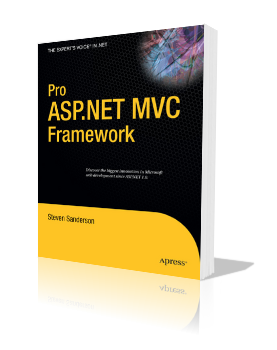
I've finally finished reading Pro ASP.Net MVC Framework by Steven Sanderson. The book is slightly dated, since it discusses the technology used in Visual Studio 2008 and without any mention of the new Razor engine, but these are details that are not important to the content of the book anyway. I can say that it is a very nice book and it was worth reading, especially the first part.

There are two parts to this, the first being a TDD ASP.Net MVC web shop application built step by step and explained line by line. It goes through some Domain Driven Design concepts as well, it does unit testing and mocking, even shows off a little dependency injection via Castle Windsor. What I liked most, though, is how painstakingly thorough Sanderson was explaining every single detail. He didn't assume anything as he documented every step of the way, down to what lambda expressions are and what .Net features he was using.

The second part of the book is a little less readable, as it goes through the classes and features of ASP.Net MVC, complete with methods, properties and small samples. I highly recommend reading this part while actually experimenting with the framework on the computer. Even if you do not, this part of the book remains a very valuable reference for when you do. In this section of the book you can learn about data entry, Ajax and partial updates, application security and deployment, even how to mix classic ASP.Net with MVC, though not really recommended.

The bottom line is that Pro ASP.Net MVC Framework is a must read for a developer learning ASP.Net MVC. There is an updated version of the book for VS2010 and .Net 4 that I think that I will also read (the book was so good). Here is the link for Pro ASP.NET MVC 2 Framework.